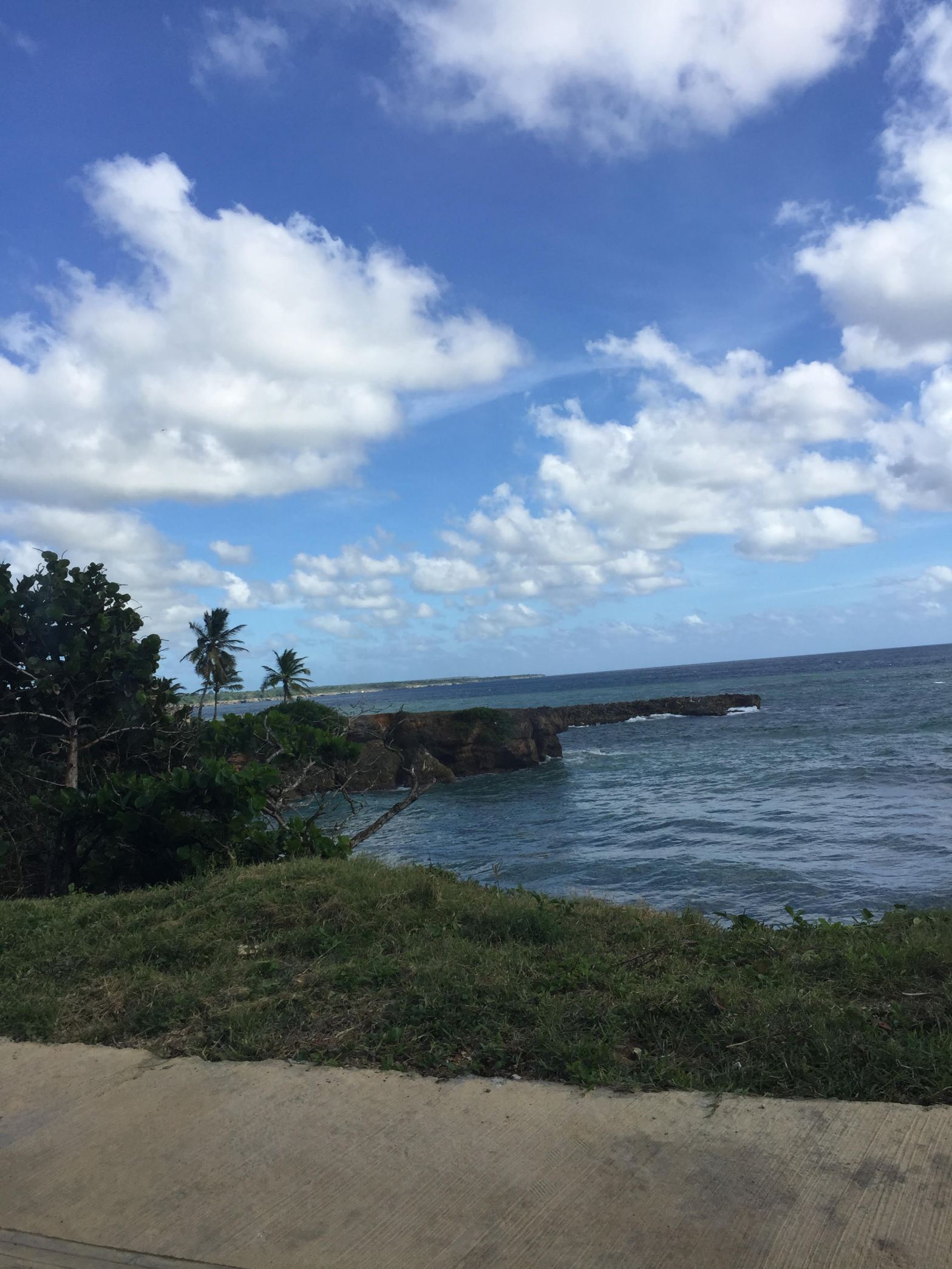
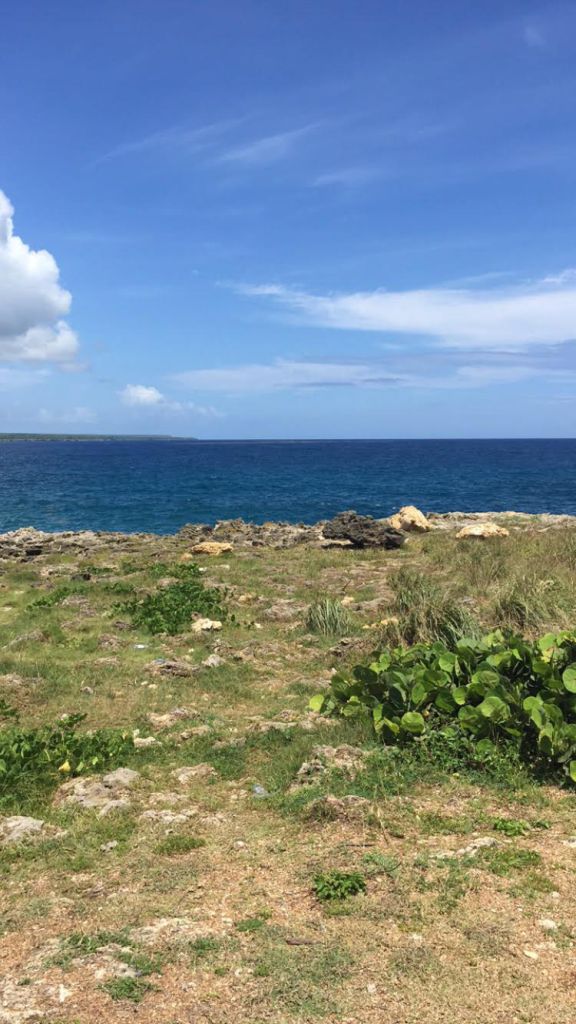
It was December 17, 2016 as I sat down at the water front restaurant set on the coastal cliffs of Boca de Yuma, Dominican Republic. One of few little restaurants on a tiny street off the coast of the Atlantic ocean in a small town with only one main road to come in or out. Surrounded by tropical vegetation and cleared farm land it was about a 20 minute drive from San Rafael del Yuma on highway 4 to reach the coastal town of Boca De Yuma. Upon arrival by rental car we parked on the small road where we were greeted by a young boy whom we paid a few pesos to look after our car to ensure it was not broken into or stolen while we enjoyed our meal; a customary act necessary outside of the large tourist areas where security is limited. The temperatures were in the 80s, but the cool coastal breeze was a great relief making it feel as though it was in the comfortable low 70s.
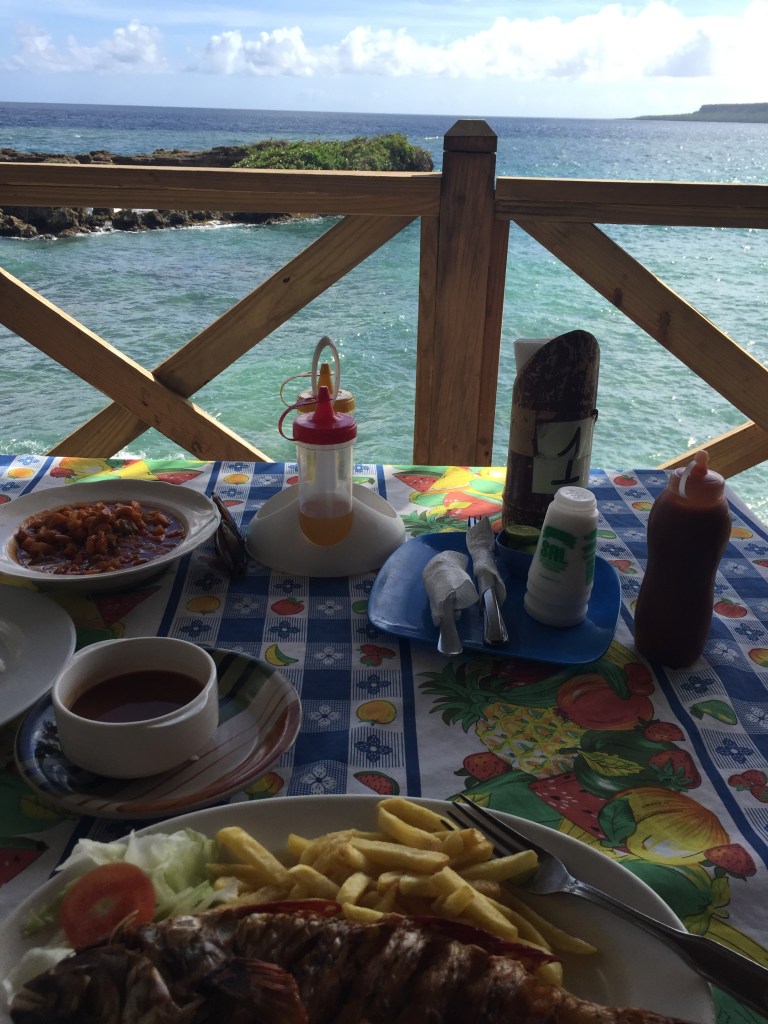
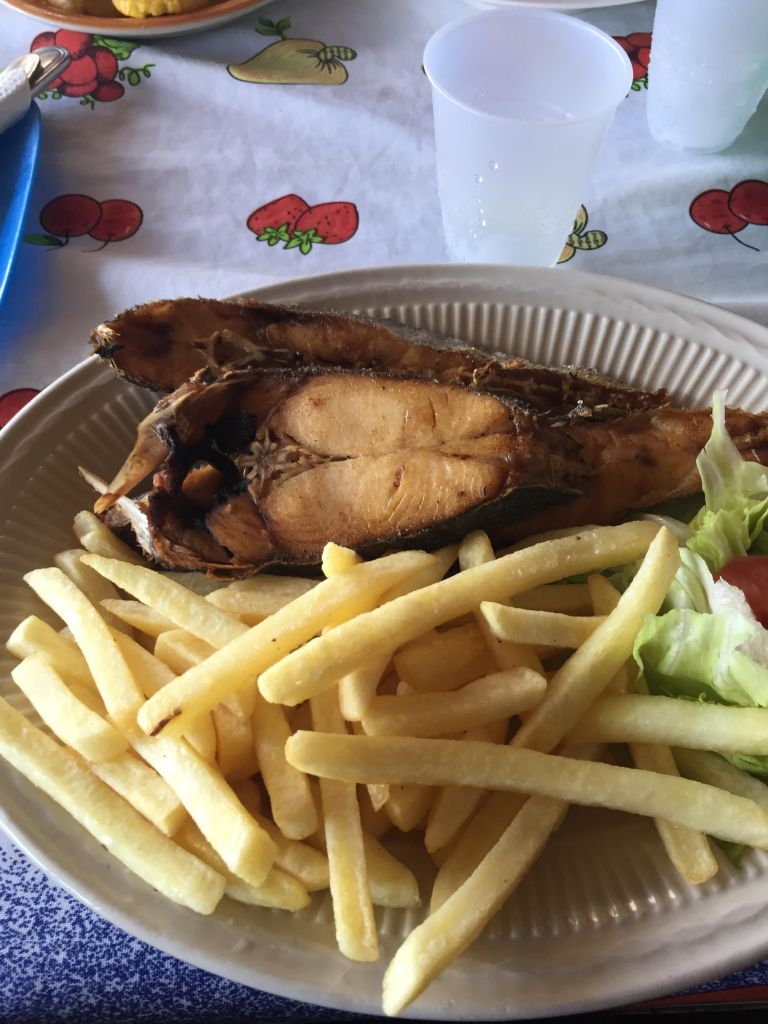
We were seated at a table for four directly overlooking the cliff at the beautiful clear teal waters with the green moss covering the surrounding rocks. The thatched roof covered the entire restaurant of about 30 tables, though most of the tables were unoccupied. The tables sat upon an unfinished gravel covered ground with a multicolored paper table cloth displaying bowls of fruit. As I gazed at the menu in front of me written entirely in Spanish I had no idea what to select so I relied on my friend who was a local to choose for me. My friend informed me this was this best restaurant in the area and I could not go wrong with anything on the menu. I went with the Butu (parrotfish) and fries and was not disappointed. For just under $15 we were able to enjoy a nice full sit down meal for two, a meal that would have cost close to $30 to $40 in a tourist area or in the states. My friend also noted it was much cheaper than its next door neighbor who contracted with a bus company to drag tourist from the city of La Romana. The restaurant owner next door up’ed his prices to amounts locals could barely afford, but the wealthy tourists would gladly pay. His statement made me think twice about my position as a tourist myself.
On one hand I was excited to enjoy the island life and take in a meal of fresh caught fish right from the same waters I viewed while I ate, a view unavailable to me in the concrete jungle of Philadelphia where I reside. While also appreciating the fact that pesky tourists had not discovered this hidden gem of a restaurant where I was currently seated. A place where I felt like I was truly getting a local experience. On the other hand I thought of all the positives and negatives that would affect this community if it was open to mass tourism like many other areas of this beautiful country.
On the positive side an increase in tourism could result in an increase in income for the locals; from the street runners looking to make a few pesos protecting cars, to restaurant owners and their staff that would serve the visitors. On the contrary an increase in tourism could result in the cutting down of trees and destruction of local habitats for industrial developments. It could also mean the pushing out of local business owners and restaurateurs by larger corporations and investors. For example the widely known tourist city of Punta Cana was once just an undeveloped jungle area now home to an airport and resorts spread across the eastern shore of the Dominican Republic.
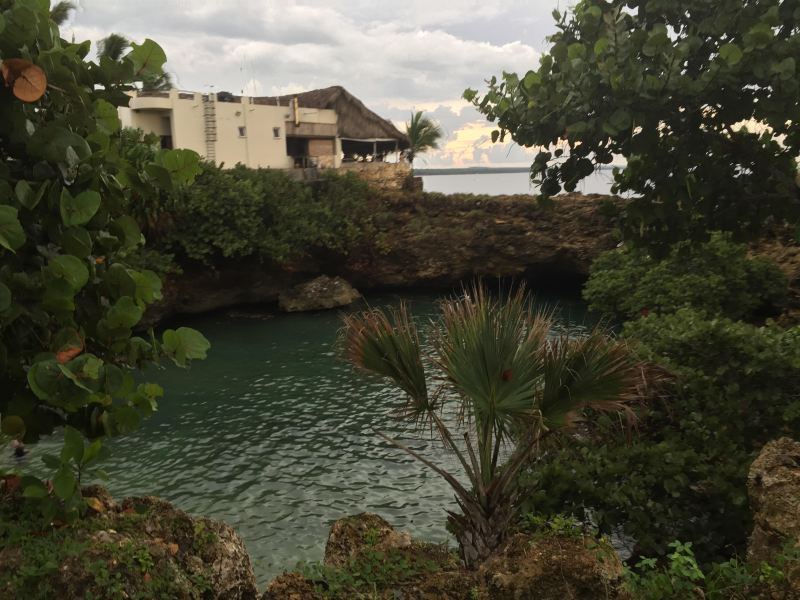
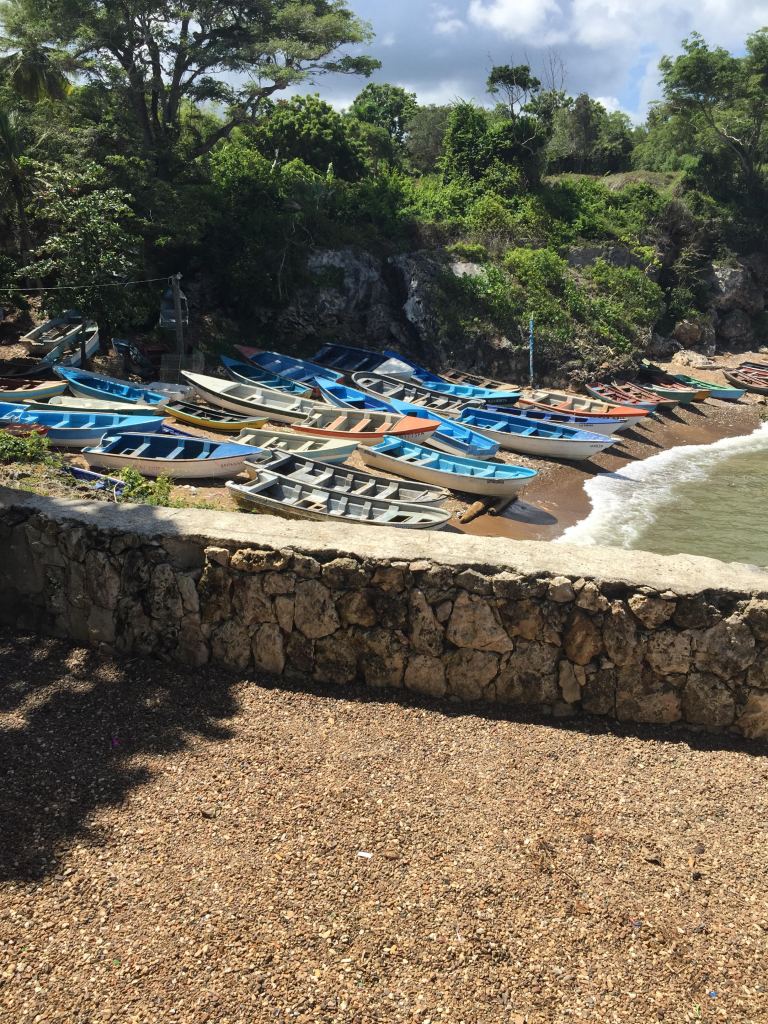
I thought of the natural pool just down the road tucked between the cliffs, where the locals go to hang out and cool off from the scorching heat. A beautiful natural pool that could wound up polluted by tourists and possibly closed off by local government in and attempt to earn profits. I imagined the current free gifts of nature taken away from this community and exploited for financial gain. I thought of how the local fishing industry could be affected if the large fishing boats with modern equipment came in and took all the catch and out did the local fishermen in their small colorful wooden boats. I thought of all the potential regulations that could be imposed that would require costly technology or safety equipment that locals could not afford. I thought of the potential over fishing that could devastate the local ecosystems. A sentiment that was felt 8 months later upon my return in hopes of enjoying another plate of Butu (parrotfish) only to find that it could not be served as the parrotfish had been placed on the endangered species list. Restaurants caught selling the fish would face huge fines, a risk this local restaurant owner could not afford to take.
The potential environmental and economic impacts of increased tourism are things that should not be ignored. My take away from this experience was moderation. Yes, I feel the natural serene waters and fresh fish on this tropical coastal hill are something everyone should get a chance to experience, but these things should be enjoyed in moderation not in excess. I am in agreement with local communities that choose to limit tourism in order to preserve their local ecosystems and local way of living. Such as the limits on tourism placed in protected sites like the Galapagos Islands in Ecuador. Or the restrictions placed on some Native American reservations in the United States. As much as I would love to enjoy my Butu upon every visit to the Dominican Republic I believe it is better served for parrotfish to thrive in nature than be made extinct due to my gluttonous human appetite. I believe that local communities should be supported and have ways to make a living without being subjected to over inflation and unaffordable costs of living based on the presence of tourist. I believe we should explore without exploiting and enjoy without destroying the natural God given wonders of this planet. Conscious travel, conscious living, and conscious being.
 RoyalT Speaks